
Our integrated manufacturing facility combines advanced die casting technology with precision brake lining production — all under one roof in Pakistan.
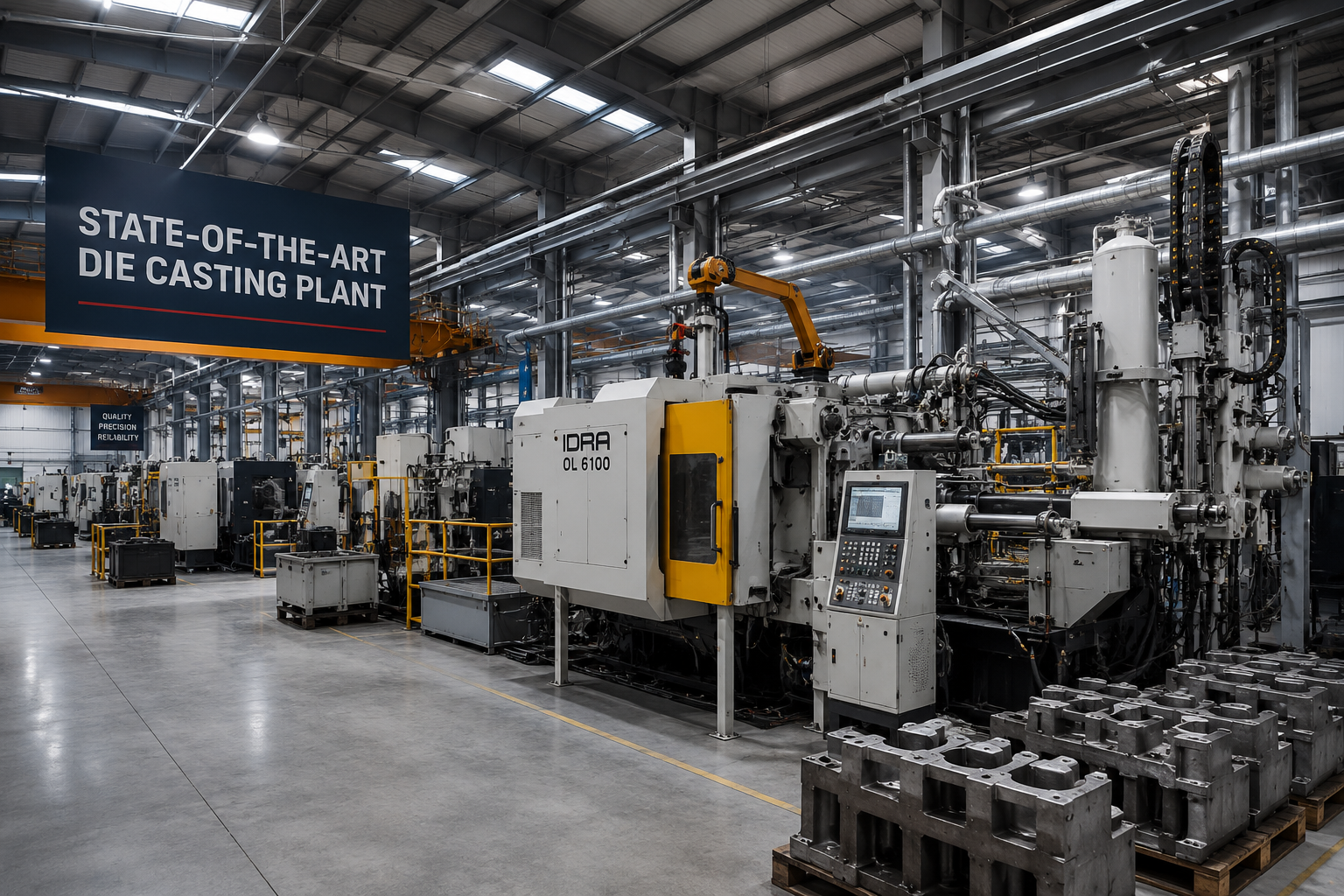
Installed in 2015 in collaboration with our Chinese technology partners, our Die Casting Plant is a defining milestone in Pakistani automotive manufacturing. Using high-pressure die casting techniques, we produce precision aluminum brake shoe bodies with tight dimensional tolerances. Each casting is formed from high-grade aluminum alloy, stamped into the exact design shape required to fit specific vehicle brake assemblies — ensuring a perfect, reliable fit every time.
Molten aluminum alloy is injected under extreme pressure into precision CNC-machined dies. The result is a dense, bubble-free casting that perfectly mirrors the target vehicle's caliper shape, with no post-machining required in most applications.
After casting, each shoe body undergoes surface blasting to roughen the bonding surface. This critical step dramatically increases adhesion strength, preventing the friction lining from separating during high-stress braking — a safety-critical process we never skip.
Every die casting undergoes controlled thermal treatment to relieve internal stress and optimize the mechanical properties of the aluminum alloy. Precise temperature monitoring throughout this process ensures structural integrity for the lifetime of the part.
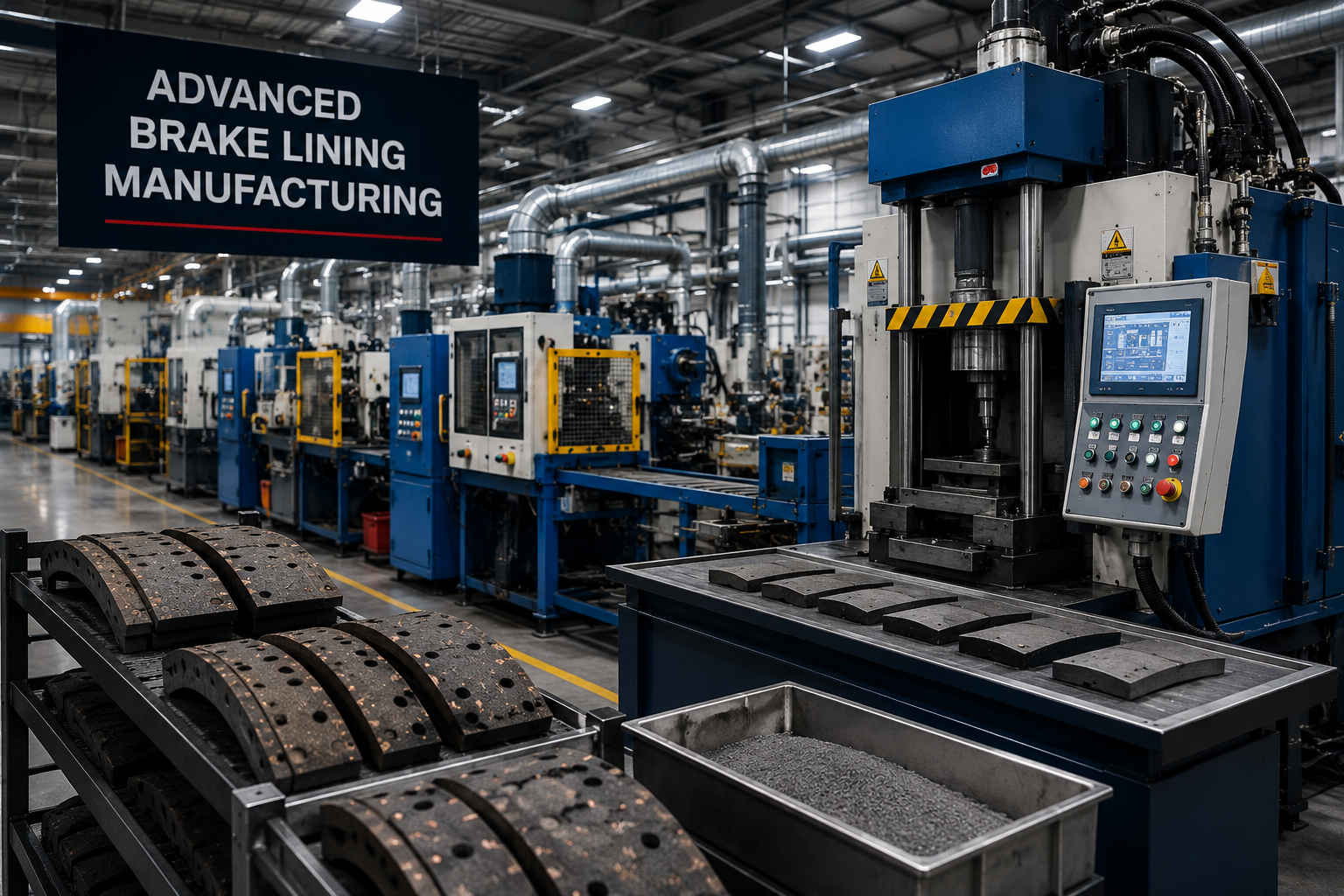
Following our landmark MOU and the technology transfer from China, Dutch Corporation now manufactures premium brake linings entirely on Pakistani soil. Chinese engineers personally supervised the installation, commissioning, and calibration of every machine. Our formulations are blended from multiple carefully selected friction materials — each chosen for its specific contribution to performance, longevity, low dust output, and fade resistance.
Our brake linings are formulated using multiple friction components of the highest grade. Each raw material is carefully selected and blended to a precise formulation that maximizes braking performance, extends service life, and minimizes fade across a wide temperature range — following European-standard protocols.
Our friction formulations are molded under extreme temperatures and hydraulic pressure into precise brick-form linings. This hot-press process ensures uniform density throughout the lining body, which directly translates into stable, predictable braking force throughout the life of the product.
After molding, finished linings are cured in high-temperature ovens for 8–10 hours to complete the chemical bonding of friction materials. The linings are then ground to precise thickness tolerances and every production batch is tested on our dedicated friction test bench to verify that the coefficient of friction meets our specification before release.
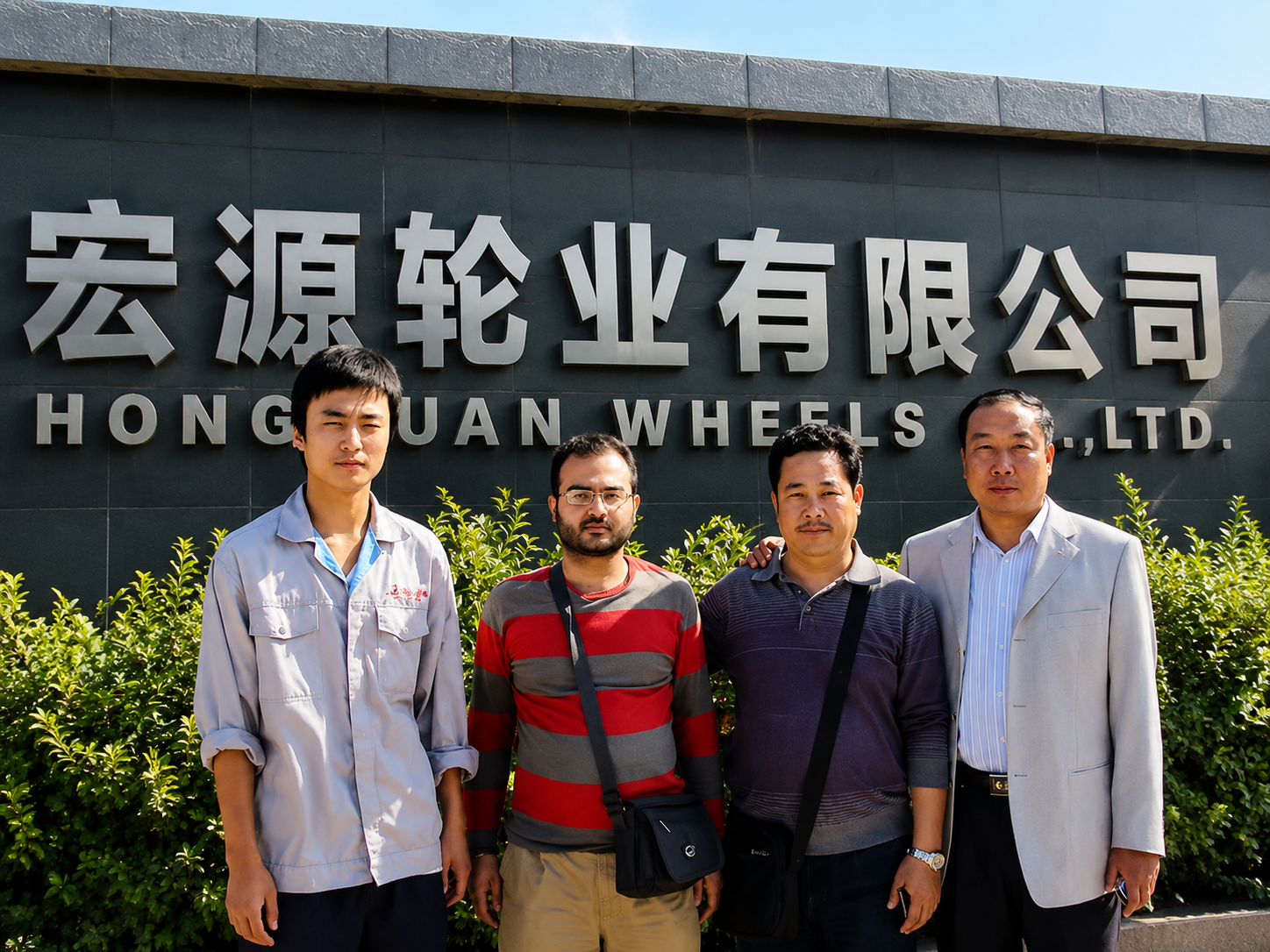
Our MOU with Chinese manufacturing partners is one of the most successful technology transfer initiatives in Pakistan's automotive components sector. It established not just a machinery transfer, but a complete knowledge transfer — covering formulations, processes, quality systems, and engineering expertise that now resides within our local team.
Formal Memorandum of Understanding signed with Chinese manufacturing partners, establishing the framework for complete technology transfer to Pakistan.
Advanced brake lining manufacturing machinery — hydraulic presses, mixing systems, and testing equipment — shipped from China to our Pakistani facility.
Chinese engineers and technical specialists flew to Pakistan to personally supervise machinery installation, calibration, and commissioning.
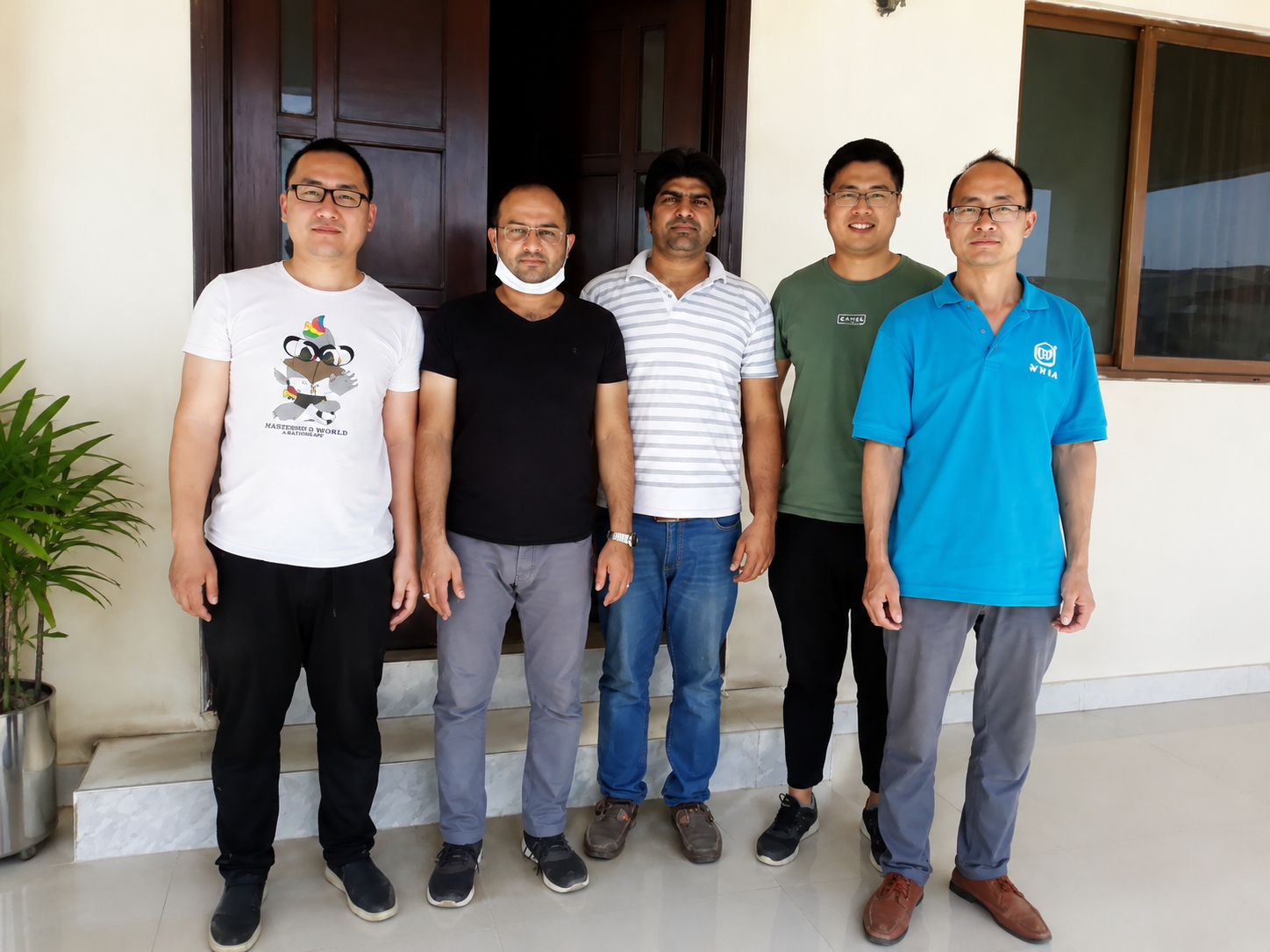
Comprehensive training of Dutch Corporation's Pakistani engineering and production team by Chinese experts — covering operation, maintenance, and quality protocols.
Successful commencement of full-scale local brake lining production. Pakistan joins a select group of nations with this advanced manufacturing capability.
Ongoing collaboration with Chinese and European partners ensures our formulations and processes remain at the cutting edge of global brake technology.
Each friction formulation contains multiple raw materials of the highest quality. Every incoming batch is chemically analyzed and physically tested against our specification before it is approved for production blending.
Approved materials are blended to our precise formulation, then molded and hot-pressed under controlled temperature and pressure to form the final lining shape with uniform density throughout.
Finished linings are heat-cured for 8–10 hours to achieve permanent bonding of friction materials, then precision-ground to exact thickness tolerances required for each application.
100% visual and dimensional inspection is carried out on all finished products. Each lining is checked for correct dimensions, surface finish, and appearance before being individually packaged and dispatched to ensure nothing less than perfect product reaches our customers.